


The Costa Brava is full of well-known beaches, but it also hides small corners that preserve the wildest essence of the Girona coastline. Coves surrounded by cliffs, transparent waters, paths among pine trees and landscapes that invite you to stop time.
If you are looking for peace and quiet, nature and a different way to discover the Costa Brava, these secret coves are a safe bet. Some are only accessible on foot or from the sea, which makes them much more preserved and less crowded spaces.
Staying at a campsite in Girona is one of the best ways to explore them. It allows you to set off early, avoid the busiest hours and combine a day at the beach with routes along the Camí de Ronda, snorkelling or visits to fishing villages.
Below, we suggest five coves that are well worth discovering this summer.
The most spectacular coves on the Costa Brava are usually located away from large urban centres. Many require a short walk or form part of the Camí de Ronda itineraries, which is why staying at a campsite is an especially practical option.
From the campsites in Girona, you can organise each day at your own pace: start the day with a swim in a quiet cove, have lunch on a terrace overlooking the sea, follow a route between cliffs or return to the campsite to relax by the pool.
In addition, many campsites on the Costa Brava are located very close to these natural areas, allowing you to reduce travel time and enjoy the territory even more.
From Cap de Creus to Tossa de Mar, these are some of the most surprising coves on the Costa Brava to discover this summer.
Located within the Cap de Creus Natural Park, Cala Jugadora is one of the most surprising places on the entire Costa Brava. Its rock formations, shaped over thousands of years by the tramontane wind and the sea, create one of the most unique geological landscapes on the Girona coastline.
The waters are transparent and their seabeds preserve meadows of oceanic posidonia, an essential ecosystem for Mediterranean biodiversity. It is an excellent place to practise snorkelling and discover fish, starfish and other marine species.
Its proximity to the Cap de Creus Lighthouse also allows you to complete your visit with a walk through one of the most iconic landscapes in Catalonia.
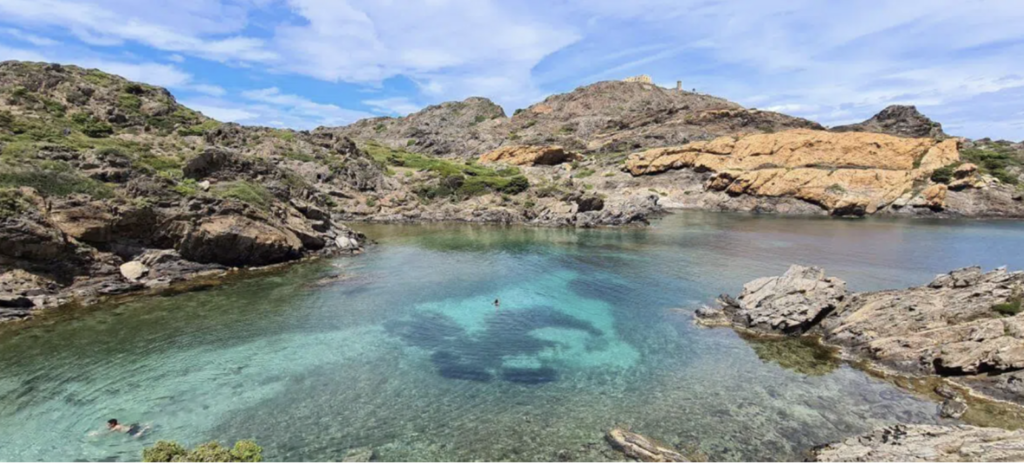
Cala Nans is a small cove located on the outskirts of Cadaqués, surrounded by nature and away from the busiest beaches. It is a good option for anyone looking for a quiet cove where they can disconnect from the pace of summer.
To get there, you need to follow the path that leads to the Cala Nans Lighthouse, a route of around six kilometres, there and back, which offers spectacular views over the bay of Cadaqués and Portlligat.
The cove stands out for the tranquillity of its surroundings and its clean waters, ideal for swimming or simply resting while listening to the sound of the sea.
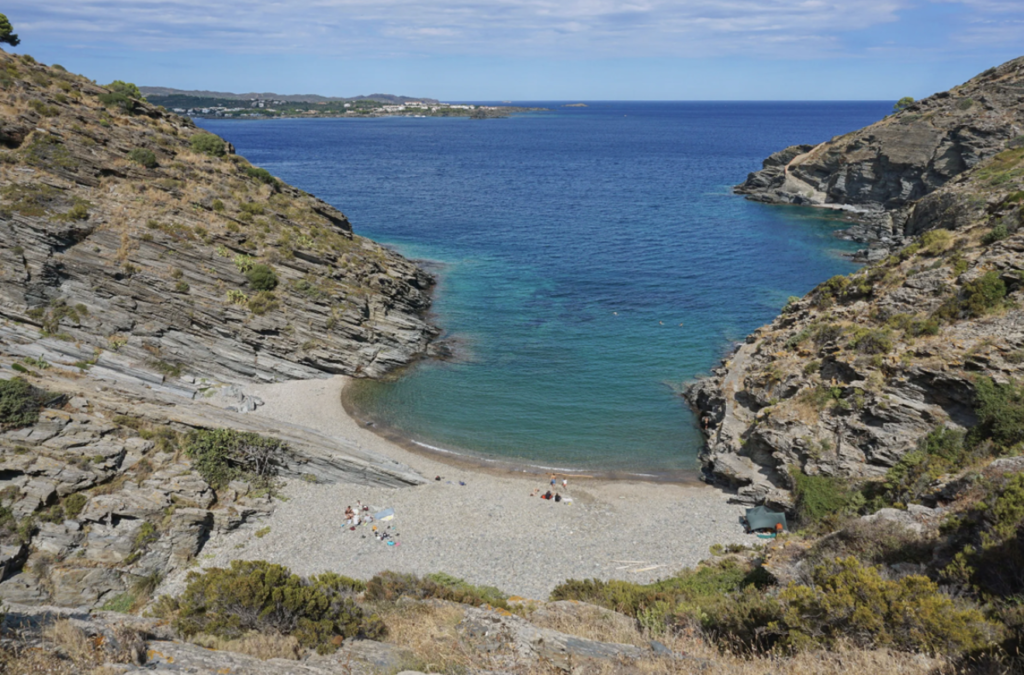
Cala Pedrosa is one of the most authentic coves in the area around l’Estartit and the Montgrí, Medes Islands and Baix Ter Natural Park.
It is reached after a pleasant walk along the Camí de Ronda, surrounded by Mediterranean vegetation and with constant views of the sea. The views of the Medes Islands and the protected surroundings make this one of the most recommended excursions in the area.
Once you arrive, a pebble cove, crystal-clear waters and great marine richness await you. It is especially recommended for snorkelling, as one of the most valuable underwater ecosystems in the Mediterranean is located very close by.
It is a perfect place for anyone looking to disconnect from the usual rhythm and enjoy the most natural side of the Costa Brava.
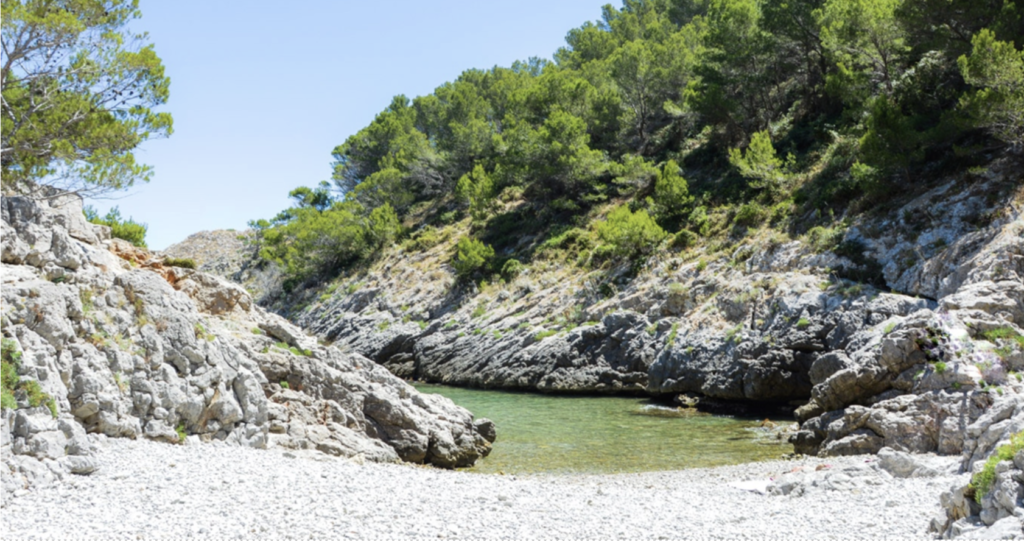
Located between Palamós and Calella de Palafrugell, Cala del Crit is one of those places that still preserves the most authentic essence of the Costa Brava. Surrounded by cliffs and Mediterranean vegetation, it is an ideal refuge for anyone looking to disconnect.
It is reached on foot along a section of the Camí de Ronda, a route that is already part of the experience. Along the way, the viewpoints offer spectacular panoramic views of the coastline. It is an ideal cove to combine with a walk between Calella de Palafrugell and Palamós.
The name of the cove is linked to an old legend about the cries that alerted fishermen to the arrival of pirates on the coast. Today, however, the only thing you will hear is the sound of the waves.
Its transparent waters make it a good option both for swimming and for snorkelling in a peaceful setting.
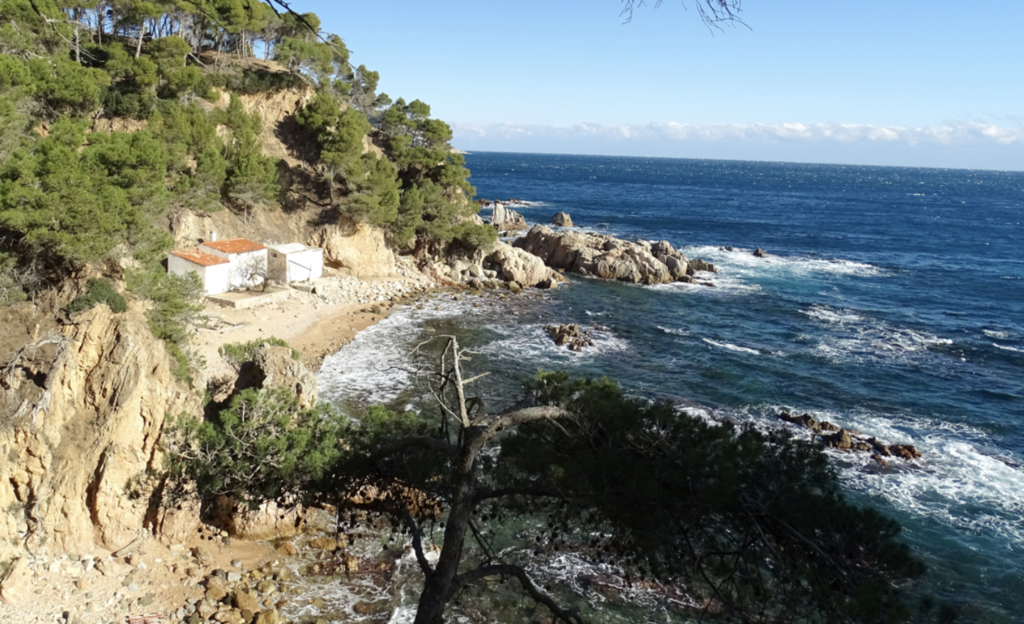
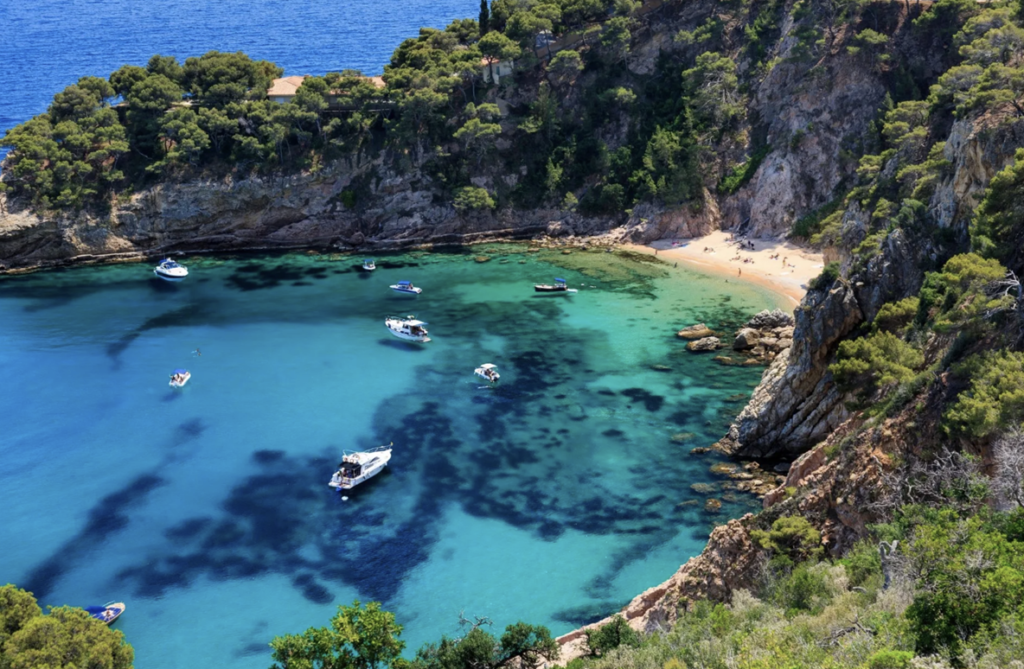
Cala Futadera is one of those coves that surprises you from the very first moment. Located a few kilometres from Tossa de Mar, it stands out for its turquoise waters, the cliffs that surround it and its feeling of isolation.
To get there, you need to go down a long staircase that crosses the forest until it reaches the sea. It is also accessible by boat, a very common option during the summer months.
Precisely because access requires a little more effort, it tends to be less crowded than other beaches in the area.
It is one of the most spectacular landscapes in Tossa de Mar and one of those places that invite you to disconnect completely.
To enjoy these natural spaces comfortably and help preserve them, it is advisable to keep a few tips in mind:
These small actions help preserve unique spaces so that everyone can continue to enjoy them.
Although these coves can be visited for much of the year, the months of May, June and September are especially recommended. Temperatures are pleasant, there are fewer visitors and it is easier to enjoy the peace and quiet that characterises these spots.
If you travel during July or August, try to arrive early in the morning to find more space and enjoy the crystal-clear waters calmly.
A getaway to the Costa Brava is not just about spending the day at the beach. It means waking up surrounded by nature, having breakfast outdoors and deciding whether that day is for discovering a hidden cove, walking along the Camí de Ronda or snorkelling in crystal-clear waters.
The campsites in Girona are the ideal starting point for enjoying this type of experience. Many are located very close to the coast and allow you to combine days by the sea with swimming pools, family activities, local gastronomy and charming villages.
Whether you travel as a couple, with friends or as a family, you will find campsites suited to every holiday style: from establishments with direct access to the beach to accommodation surrounded by pine forests, ideal for disconnecting after a day of excursions.
Exploring the hidden coves of the Costa Brava from a campsite allows you to discover the territory without rushing and make the most of every day.
There are places that you only discover when you move away from the most common routes. The secret coves of the Costa Brava are an invitation to experience the territory calmly, to let yourself be surprised by the landscape and to turn each day into a new adventure.
From a campsite in Girona, these small treasures are much closer than you might imagine.
Cala Jugadora, Cala Pedrosa, Cala del Crit, Cala Futadera and Cala Nans are some of the least crowded coves on the Costa Brava. Since many are only accessible on foot or from the sea, they usually offer a quieter atmosphere.
Cala Jugadora and Cala Pedrosa stand out for their seabeds and the transparency of their water. Other coves in the Cap de Creus Natural Park and around the Medes Islands are also very good options.
The months of May, June and September are ideal for enjoying them with more peace and quiet. If you go in July or August, it is advisable to arrive early in the morning.
It depends on the cove. Some, such as Cala del Crit or Cala Nans, involve walks that are accessible for families used to walking. Others, such as Cala Futadera, have more demanding access because of the stairs.
In some cases yes, but many of the most hidden coves on the Costa Brava require a short walk from the parking area or are only accessible on foot or from the sea. This is precisely one of the reasons why they preserve their charm and tranquillity.
Staying at a campsite in Girona is one of the most practical options. It allows you to easily access different sections of the Costa Brava, combine beach days with excursions and enjoy a privileged natural environment.